
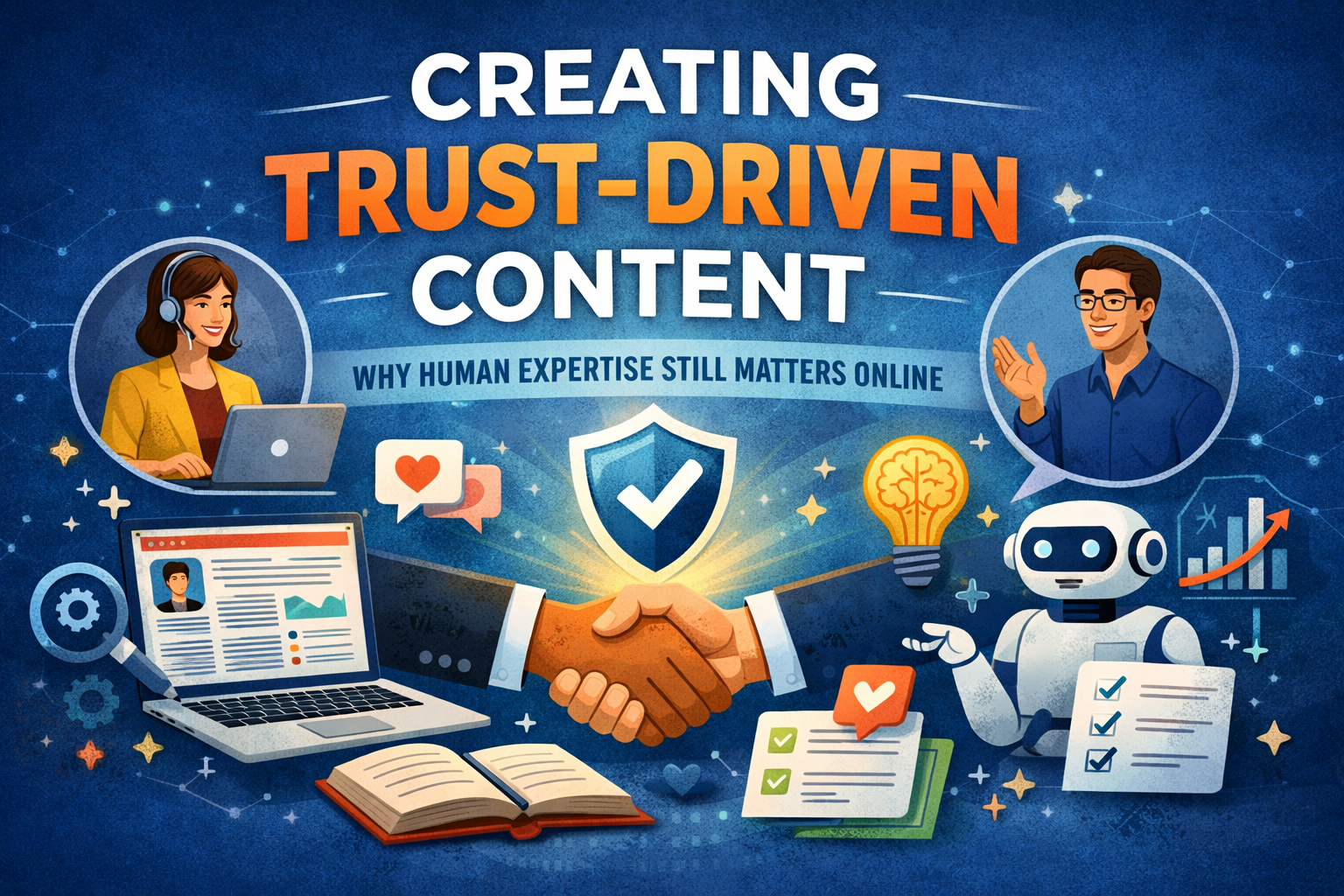
In today’s digital world, content is everywhere. Blogs, social media posts, AI-generated articles, videos, and ads are published every second. Yet, despite this overload of information, one thing continues to stand out as the true differentiator: trust. Creating trust-driven content is no longer optional—it is essential for brands, businesses, and creators who want long-term success.
While artificial intelligence has transformed content creation, human expertise still plays a critical role in Creating Trust online. Audiences don’t just consume content; they evaluate it, question it, and decide whether the source is credible. This is where human insight, experience, and authenticity remain irreplaceable.
What Is Trust-Driven Content?
Trust-driven content is content that audiences believe, rely on, and feel confident acting upon. It is accurate, transparent, empathetic, and aligned with real human experiences. Unlike content created purely for clicks or search engines, trust-driven content focuses on value over volume.
Creating trust means:
-
Providing correct and verifiable information
-
Being honest about limitations and risks
-
Showing real expertise and experience
-
Communicating in a clear and relatable way
When trust is established, readers return, share content, and eventually convert into loyal customers or followers.
The Rise of AI and the Trust Gap
AI tools can generate articles quickly, summarize complex topics, and optimize content for SEO. However, speed does not always equal credibility. Many readers are becoming aware of generic, repetitive, or shallow AI-generated content.
This has created a trust gap. When content lacks depth, context, or accountability, users hesitate to trust it—especially in areas like health, finance, education, and career guidance. Search engines like Google also prioritize E-E-A-T (Experience, Expertise, Authoritativeness, and Trustworthiness), which strongly favors human-led insights.
AI can assist, but human expertise gives content its soul and reliability.
Why Human Expertise Still Matters in Creating Trust
Real-World Experience Builds Credibility
Human experts bring lived experiences that machines cannot replicate. A professional sharing lessons from years of practice adds authenticity that readers instantly recognize. Personal examples, case studies, and firsthand observations help audiences connect and trust the content.
For example, a web designer explaining real client challenges builds more trust than a generic design guide.
Emotional Intelligence Connects With Readers
Trust is emotional, not just logical. Humans understand tone, empathy, and cultural context. A skilled writer knows when to reassure, warn, or motivate the reader.
Content created with emotional intelligence:
-
Acknowledges reader concerns
-
Uses relatable language
-
Avoids robotic or overly polished tones
This human touch is essential for Creating Trust, especially in sensitive or decision-based content.
Accountability and Transparency Matter
When a human expert publishes content, there is accountability. Readers know someone stands behind the words. This builds confidence, especially when the author:
-
Shares credentials
-
Cites reliable sources
-
Updates content when information changes
AI cannot take responsibility for mistakes, but human authors can—and that accountability strengthens trust.
Critical Thinking Prevents Misinformation
Human experts analyze, question, and verify information. They understand nuances and exceptions that automated systems may miss. In a time when misinformation spreads quickly, expert-driven content acts as a filter of truth.
Creating trust means not oversimplifying complex topics and clearly explaining what readers should and should not expect.
How to Create Trust-Driven Content Online
Focus on Accuracy Over Virality
Content that exaggerates or misleads may gain short-term attention but loses long-term trust. Always fact-check and avoid clickbait headlines that don’t match the content.
Show the Human Behind the Content
Add an author bio, share your experience, or explain why you are qualified to talk about the topic. Transparency builds authority and helps readers feel confident in your advice.
Use Clear, Simple Language
Trust grows when content is easy to understand. Avoid unnecessary jargon and explain technical terms clearly. Readers trust writers who respect their time and intelligence.
Balance AI Assistance With Human Editing
AI can help with structure, grammar, and research, but human review is essential. Edit content to add insights, opinions, and practical examples that only a human can provide.
Encourage Interaction and Feedback
Allow comments, questions, or feedback. Responding to readers shows that you value their perspective. Two-way communication strengthens trust and credibility.
The SEO Advantage of Creating Trust
Search engines increasingly reward content that demonstrates real expertise and user value. Trust-driven content:
-
Has better engagement rates
-
Reduces bounce rates
-
Earns natural backlinks
-
Builds long-term organic traffic
Creating trust is not just good ethics—it’s a smart SEO strategy.
In an age of automation, human expertise is the foundation of trust. While AI can enhance productivity, it cannot replace experience, empathy, and accountability. Creating trust-driven content means putting people first—understanding their needs, answering their questions honestly, and providing real value.
As digital spaces become more crowded, audiences will gravitate toward voices they trust. By combining technology with genuine human expertise, creators and businesses can build lasting relationships and stand out in a world full of noise.