
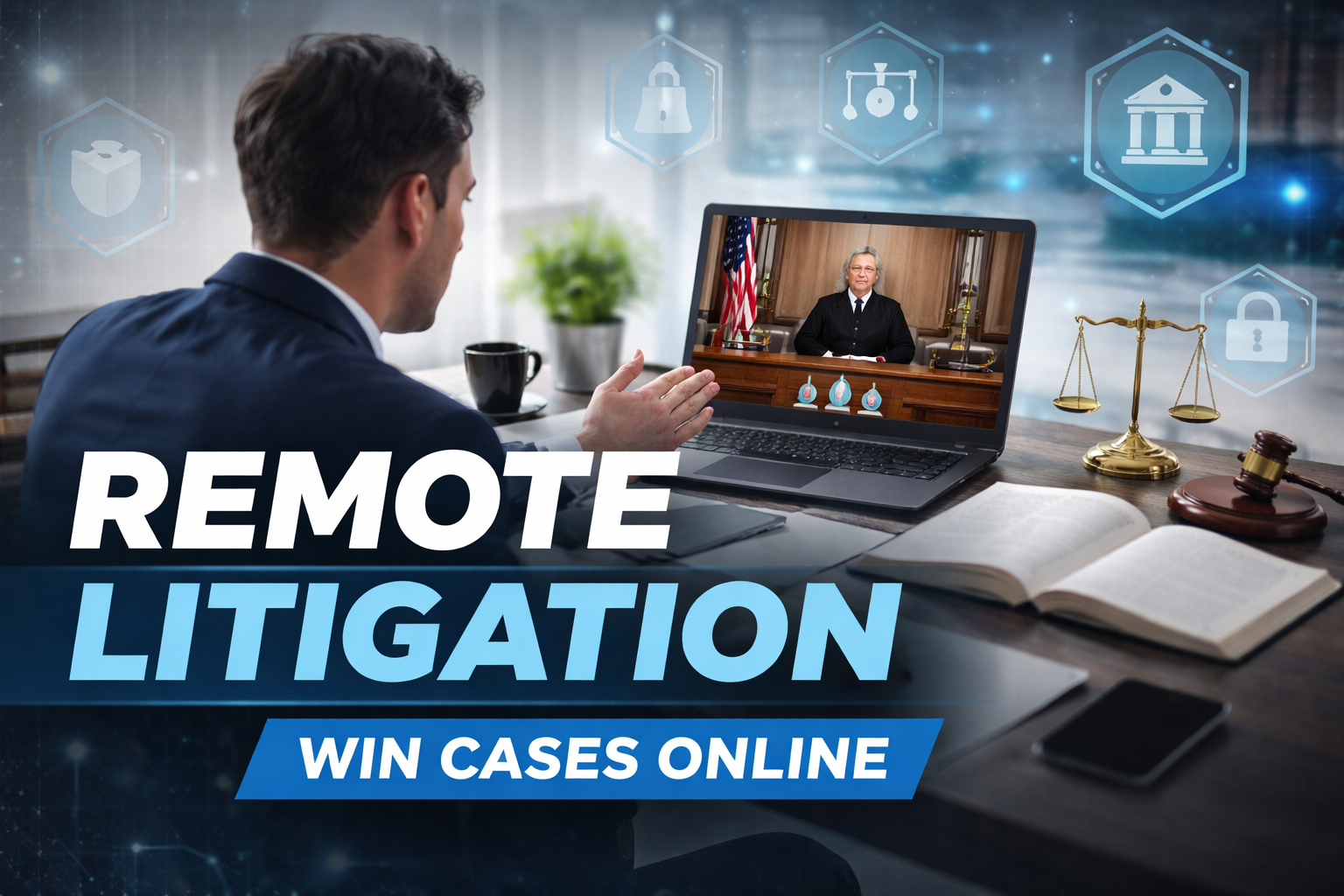
The legal profession is undergoing one of the biggest transformations in its history. Technology has changed how lawyers communicate, research, file documents, and even argue cases. Today, Remote Litigation is becoming a standard practice in many courts across the world.
Instead of physically appearing in courtrooms, lawyers now attend hearings through video conferencing platforms, submit documents digitally, and collaborate with clients from anywhere. This shift has made legal services more efficient, flexible, and accessible.
For modern lawyers, understanding Remote Litigation is no longer optional—it is an essential skill that can determine success in the evolving legal landscape.
What is Remote Litigation?
Remote Litigation refers to the process of conducting legal proceedings without being physically present in a courtroom. Lawyers, judges, and clients participate in hearings through digital platforms, electronic filings, and secure communication systems.
Many courts now support virtual hearings, digital documentation, and online case management systems. Resources like the U.S. judiciary’s electronic court system provide insight into how digital case management works.
With these systems, lawyers can file pleadings, track cases, and attend hearings from their office or home.
Why Remote Litigation Became the New Normal
The global pandemic accelerated the adoption of virtual legal proceedings. Courts needed ways to continue functioning while maintaining safety and accessibility.
As a result, many judicial systems adopted virtual platforms and discovered unexpected benefits.
Today, Remote Litigation continues even after physical courts reopened because it improves efficiency and saves time.
Legal professionals increasingly rely on online research tools such as Cornell Law School’s legal information institute to prepare cases remotely.
These tools allow lawyers to access statutes, case laws, and legal resources instantly.
Benefits of Remote Litigation for Lawyers
Time Efficiency
Traveling to courts, waiting for hearings, and dealing with scheduling conflicts can consume a lawyer’s entire day. Remote Litigation eliminates these inefficiencies.
Lawyers can attend multiple hearings in different jurisdictions within the same day.
Reduced Operational Costs
Remote hearings reduce travel costs, accommodation expenses, and office overhead. Small firms and independent lawyers especially benefit from this cost efficiency.
Digital legal resources such as the World Justice Project provide global legal insights useful for case preparation.
Better Client Communication
Clients appreciate faster communication and transparency. Virtual meetings allow lawyers to explain case developments quickly and maintain strong client relationships.
Wider Access to Justice
In remote or rural areas, traveling to court can be difficult. Remote Litigation helps clients access legal services without geographical barriers.
Key Technologies Powering Remote Litigation
Several technologies make virtual legal practice possible.
Video Conferencing Platforms
Courts now conduct hearings using secure video conferencing systems. These platforms allow judges, lawyers, witnesses, and clients to participate simultaneously.
Digital Evidence Presentation
Lawyers can present documents, videos, and digital exhibits during hearings. Evidence is shared instantly with judges and opposing counsel.
Electronic Case Filing
Most modern courts use e-filing systems that allow lawyers to submit pleadings and track case progress online.
Platforms like the American Bar Association provide guidance on legal technology and digital transformation.
These resources help lawyers stay updated with technological developments.
Skills Lawyers Need to Master Remote Litigation
Although technology makes remote courtrooms possible, lawyers must develop specific skills to succeed.
Strong Digital Communication
In virtual hearings, body language and courtroom presence are different. Lawyers must communicate clearly through cameras and microphones.
Technical Competence
Understanding video platforms, screen sharing, and digital document management is essential for Remote Litigation success.
Effective Online Research
Digital research tools allow lawyers to quickly find precedents, statutes, and legal analysis.
Cybersecurity Awareness
Legal cases involve sensitive client information. Lawyers must use secure platforms and protect confidential data during remote proceedings.
Challenges of Remote Litigation
While Remote Litigation offers many advantages, it also comes with challenges.
Technical Issues
Internet disruptions or platform glitches can delay hearings and affect case presentations.
Limited Courtroom Atmosphere
Traditional courtrooms create a sense of authority and seriousness that can influence proceedings. Virtual settings may feel less formal.
Witness Credibility Concerns
Judges sometimes find it harder to assess witness behavior and credibility through video.
Despite these challenges, courts continue improving digital infrastructure to make virtual proceedings smoother.
The Future of Remote Litigation
Legal experts believe Remote Litigation will remain a permanent part of the judicial system. Hybrid courts—combining physical and virtual hearings—are becoming common worldwide.
Law firms are also investing heavily in legal technology to remain competitive. Artificial intelligence tools assist lawyers with research, document review, and case analysis.
Future innovations may include virtual reality courtrooms, advanced digital evidence tools, and automated legal workflows.
For lawyers willing to adapt, Remote Litigation offers new opportunities to expand their practice and serve clients more effectively.
The legal profession is entering a new era where physical courtrooms are no longer the only place where justice is delivered. Technology has opened doors for faster, more flexible, and more accessible legal services.
Lawyers who embrace Remote Litigation can save time, reduce costs, and serve clients across geographical boundaries. By developing strong digital skills, staying updated with legal technology, and adapting to virtual court environments, legal professionals can thrive in this modern legal landscape.
In the coming years, the lawyers who succeed will not necessarily be those who spend the most time in court buildings—but those who master the art of Remote Litigation