

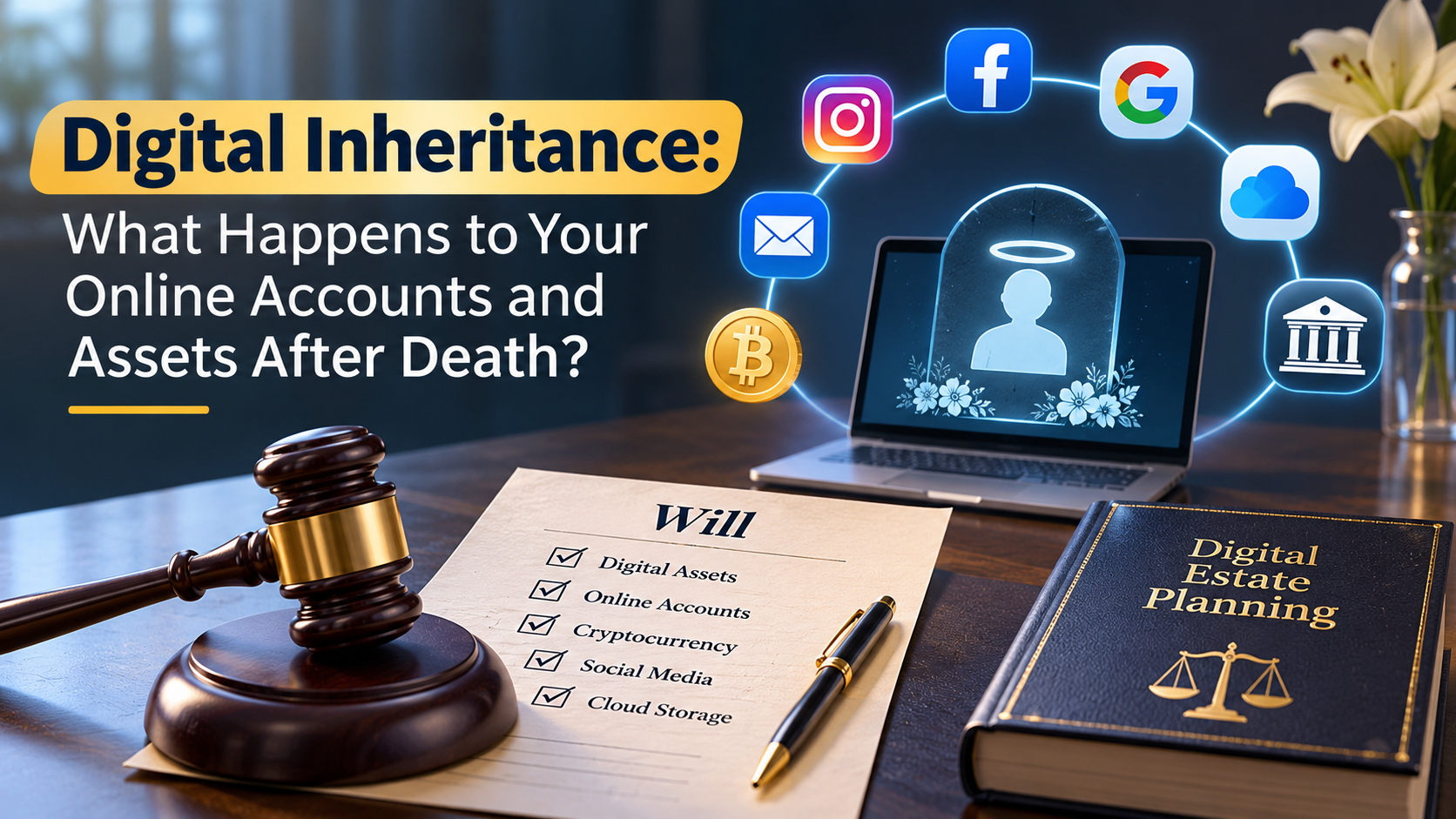
In today’s technology-driven world, our lives extend far beyond physical possessions. From social media accounts and online banking to cryptocurrency wallets and cloud storage, people own valuable digital assets. But have you ever wondered what happens to these assets when someone passes away?
Digital Inheritance is becoming an essential part of modern estate planning, especially as individuals accumulate financial and personal information online. Understanding how digital property is managed after death can help families protect valuable information, avoid legal complications, and preserve their loved ones’ online legacies.
What Is Digital Inheritance
Digital Inheritance refers to the process of transferring, managing, accessing, or disposing of a deceased person’s digital assets according to applicable laws, legal documents, and online platform policies.
Unlike traditional property, digital assets may involve complicated ownership rights, privacy restrictions, and service agreements.
For example, a person may own cryptocurrency or copyrighted digital content, while their social media account remains subject to a platform’s terms of service.
This makes digital estate planning increasingly important for individuals, businesses, and families.
What Are Examples of Digital Assets
Digital assets include electronic records, online accounts, and virtual property that may hold financial, professional, or sentimental value.
Common examples include:
Social Media Accounts: Facebook, Instagram, LinkedIn, and YouTube profiles.
-
Email Accounts: Gmail, Outlook, and other email services containing important communications.
-
Cryptocurrency: Bitcoin, Ethereum, NFTs, and digital wallets.
-
Online Banking: Internet banking records, payment wallets, and investment accounts.
-
Cloud Storage: Google Drive, iCloud, Dropbox, and stored documents.
-
Digital Businesses: Websites, domain names, e-commerce stores, and monetised content.
-
Digital Media: Photographs, videos, music collections, and electronic publications.
Understanding Digital Assets After Death is important because ownership, access rights, and transferability differ across these categories.
Some assets may pass to legal heirs, while others remain restricted by contractual agreements.
What Happens to Online Accounts After Death
The future of online accounts depends largely on the service provider’s policies and the legal rights of the deceased person’s representatives.
For instance, Google allows users to prepare for account inactivity through its Inactive Account Manager. Family members may also request account closure or certain data, subject to verification.
Apple provides a Legacy Contact feature that allows designated individuals to request access to eligible account data after death.
These policies demonstrate why Digital Inheritance requires advance planning rather than relying entirely on family members to recover accounts later.
For detailed guidance, refer to Google’s official deceased account support
Digital Inheritance Law in India
The legal framework surrounding Digital Inheritance in India is still developing.
Currently, India does not have a comprehensive standalone law governing the inheritance of every category of digital asset.
However, several existing laws may be relevant.
Indian Succession Act, 1925
This legislation provides important rules relating to wills, succession, and estate administration. Depending on the applicable succession law and the nature of the asset, certain digital property interests may form part of a deceased person’s estate.
Information Technology Act, 2000
The IT Act regulates electronic records and various aspects of digital activity. However, it does not establish a comprehensive procedure for transferring online accounts after death.
Digital Personal Data Protection Act, 2023
Section 14 provides for nomination concerning the exercise of certain data protection rights following death or incapacity. This is distinct from automatically inheriting ownership of online accounts.
Judicial Developments
Indian courts have increasingly considered whether digital information and virtual assets qualify as property.
In May 2026, a Gandhinagar civil court recognised data stored in a deceased person’s iCloud account as an estate asset, illustrating the evolving legal treatment of digital property.
For additional legal context, readers can explore Chambers and Partners’ India Private Wealth Guide.
How to Include Digital Assets in a Will
Including digital property in a legally valid will can reduce uncertainty and simplify estate administration.
Here are five practical steps.
Step 1: Prepare a Digital Asset Inventory
List important online accounts, cryptocurrency holdings, domain names, digital investments, and cloud storage services.
Step 2: Identify Beneficiaries
Specify who should receive legally transferable digital property and who should manage personal information.
Step 3: Appoint an Executor
Choose a trustworthy executor with sufficient technical knowledge to coordinate the management of digital assets.
Step 4: Secure Access Information
Store passwords, recovery information, and cryptocurrency recovery instructions securely, separately from the publicly accessible will. Avoid placing sensitive credentials directly inside the document.
Step 5: Consult a Legal Professional
Ensure the will meets applicable legal requirements and addresses platform restrictions.
Professional guidance through LawGig’s Legal Advisory Services can help individuals understand estate planning obligations and prepare appropriate legal documentation.
Why Is Digital Estate Planning Important
Digital Estate Planning helps protect both financial interests and personal memories.
Without proper planning, families may struggle to recover valuable records, access business accounts, or identify cryptocurrency holdings.
Effective Digital Inheritance planning can provide several benefits:
-
Protect valuable online financial assets.
-
Preserve important photographs and documents.
-
Reduce disputes between beneficiaries.
-
Support business continuity.
-
Prevent unnecessary account access complications.
-
Clarify how personal information should be handled.
For entrepreneurs and content creators, planning is particularly important because websites, intellectual property, and monetised accounts may generate ongoing revenue.
Legal Rights of Digital Heirs and Digital Asset Succession
The Legal Rights of Digital Heirs depend on the asset involved, applicable succession laws, and platform agreements.
Digital Asset Succession does not necessarily mean heirs automatically receive account passwords or permission to operate a deceased person’s online identity.
Some providers may require death certificates, legal heir documentation, or court orders before releasing information.
Similarly, Social Media Accounts After Death may be memorialised, deleted, or otherwise handled according to platform policies.
Therefore, Digital Inheritance should address both legal ownership and practical account accessibility.
Digital Will in India: Is It Legally Valid
A Digital Will in India is often discussed as a document containing instructions for managing online assets.
However, a purely electronic will should not be assumed to satisfy Indian testamentary formalities.
The safer approach is to incorporate digital asset instructions into a properly executed will, supported by a secure inventory and relevant platform legacy settings.
A qualified legal professional can advise on execution requirements and the appropriate treatment of specific assets.
As technology transforms personal wealth and communication, Digital Inheritance is becoming an important consideration in estate planning.
From cryptocurrency and online businesses to personal photographs and social media profiles, digital assets deserve careful legal attention.
Preparing a valid will, documenting digital holdings, and understanding platform policies can help families manage these assets responsibly.
With appropriate planning and professional legal guidance, individuals can protect their digital legacy and reduce uncertainty for future generations.
