

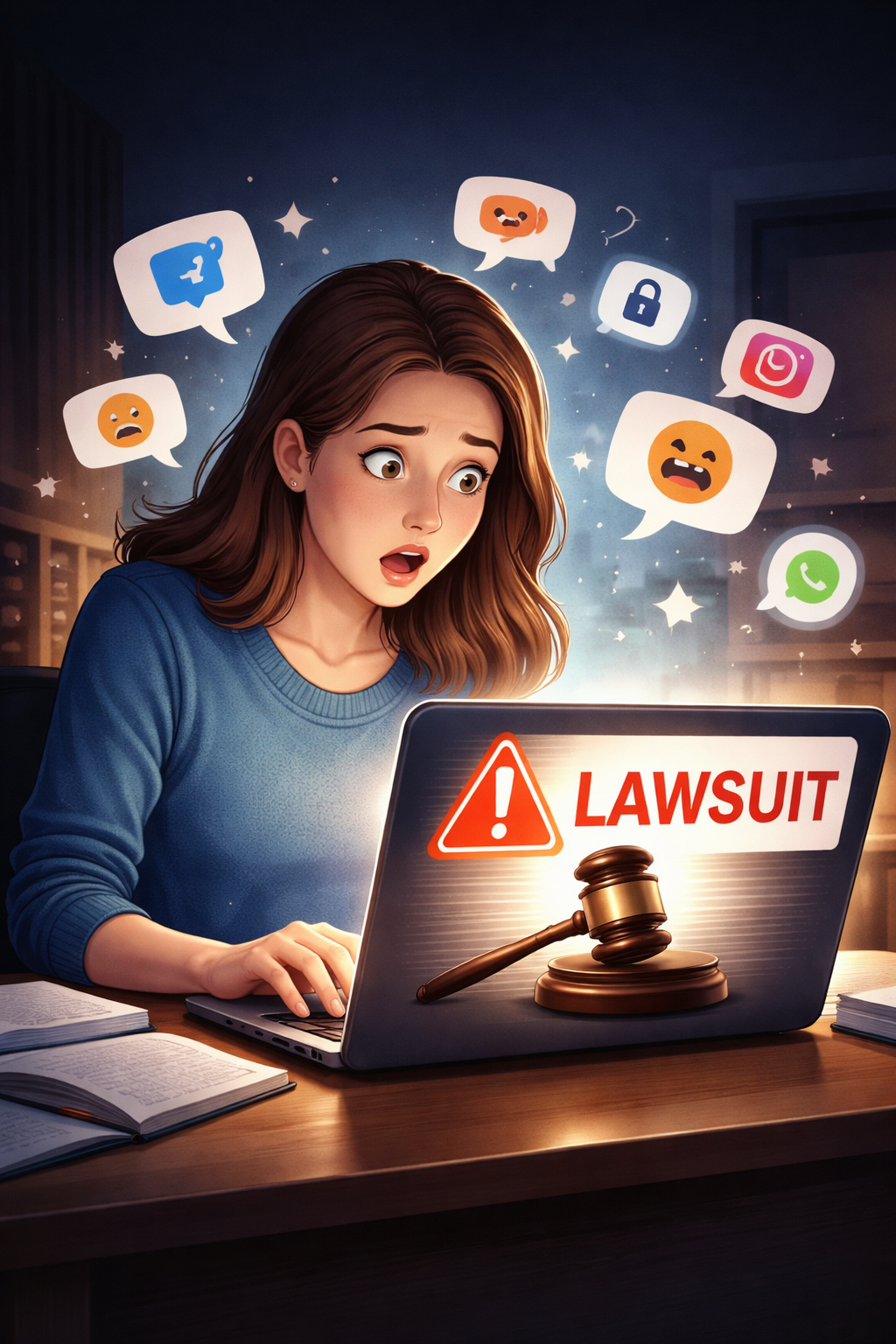
In today’s digital age, people share opinions, photos, and experiences online more than ever before. Platforms like Facebook, Instagram, and Twitter have become part of daily life. However, many users do not realize that their online actions can have serious legal consequences. A common question people ask is whether they can face legal action for what they post online. The answer is yes. Misusing social media can lead to lawsuits if your content harms others or breaks the law.
Understanding Legal Responsibility Online
Whenever you post something online, you are responsible for that content. Many people assume that being behind a screen gives them complete freedom, but this is not true. Courts treat online statements just like statements made in public.
Anything shared on social media leaves a digital footprint. Even if you delete a post later, screenshots or saved copies can still be used as evidence. This makes it important to think carefully before posting anything that could harm someone or violate legal rules.
Defamation and False Statements
Defamation is one of the most common legal issues related to online activity. It happens when someone shares false information that damages another person’s reputation. This can include posts, comments, or even sharing unverified news.
On social media, defamation spreads quickly because content can be shared widely in seconds. If you post false accusations about someone, they may take legal action against you. Even resharing such content can make you responsible.
Cyberbullying and Harassment
Another major concern is cyberbullying. Repeatedly posting harmful, abusive, or threatening messages about someone can result in legal consequences. Many countries have strict laws against online harassment.
Using social media to insult or target someone can cause emotional harm and legal trouble. What may seem like a joke to one person can seriously affect another person’s mental health. Respectful communication is always the safest approach.
Privacy Violations
Sharing someone’s private information without permission is another serious issue. This includes personal photos, phone numbers, addresses, or private conversations.
Posting such details on social media without consent can violate privacy laws. Even tagging someone in a post they are uncomfortable with can create problems. Always make sure you have permission before sharing anything related to another person.
Copyright and Content Ownership
Many users share images, music, and videos without checking whether they have the right to do so. However, using someone else’s content without permission can lead to copyright infringement.
Uploading copyrighted material on social media without proper rights can result in legal notices or fines. It is always better to use original content or give proper credit to the creator.
Hate Speech and Offensive Content
Posting offensive or harmful content can also lead to legal consequences. Governments and platforms have strict rules against hate speech and discrimination.
Using social media to spread messages that target people based on religion, race, or gender can result in penalties. Such behavior not only harms others but can also damage your own reputation.
Professional and Career Risks
Your online activity can affect your career as well. Many employers check online profiles before hiring or promoting employees.
Unprofessional behavior on social media can lead to job loss or missed opportunities. Sharing confidential information or posting negative comments about your workplace can create serious problems.
Real-Life Consequences
There have been many cases where people faced lawsuits because of their online posts. From ordinary individuals to celebrities, anyone can be held responsible for harmful content.
These examples show that social media is not just a private space—it is a public platform where actions have real consequences. Everything you post can be reviewed and used if legal issues arise.
How to Stay Safe Online
To avoid legal trouble, it is important to use social media responsibly. Here are some simple tips:
- Think before you post
- Check facts before sharing
- Respect others’ privacy
- Avoid harmful or offensive language
- Use original or credited content
Following these steps can help you stay safe and maintain a positive online presence.
Yes, you can be sued for your social media posts. While these platforms offer a space to express yourself, they also come with responsibilities. Legal issues like defamation, harassment, privacy violations, and copyright infringement are real risks.
Understanding how to use social media carefully can protect you from legal trouble. Always be mindful of what you share, because your online actions can have lasting consequences in the real world.

Chinnu Sunny
- Chinnu Sunny
- Chinnu Sunny