

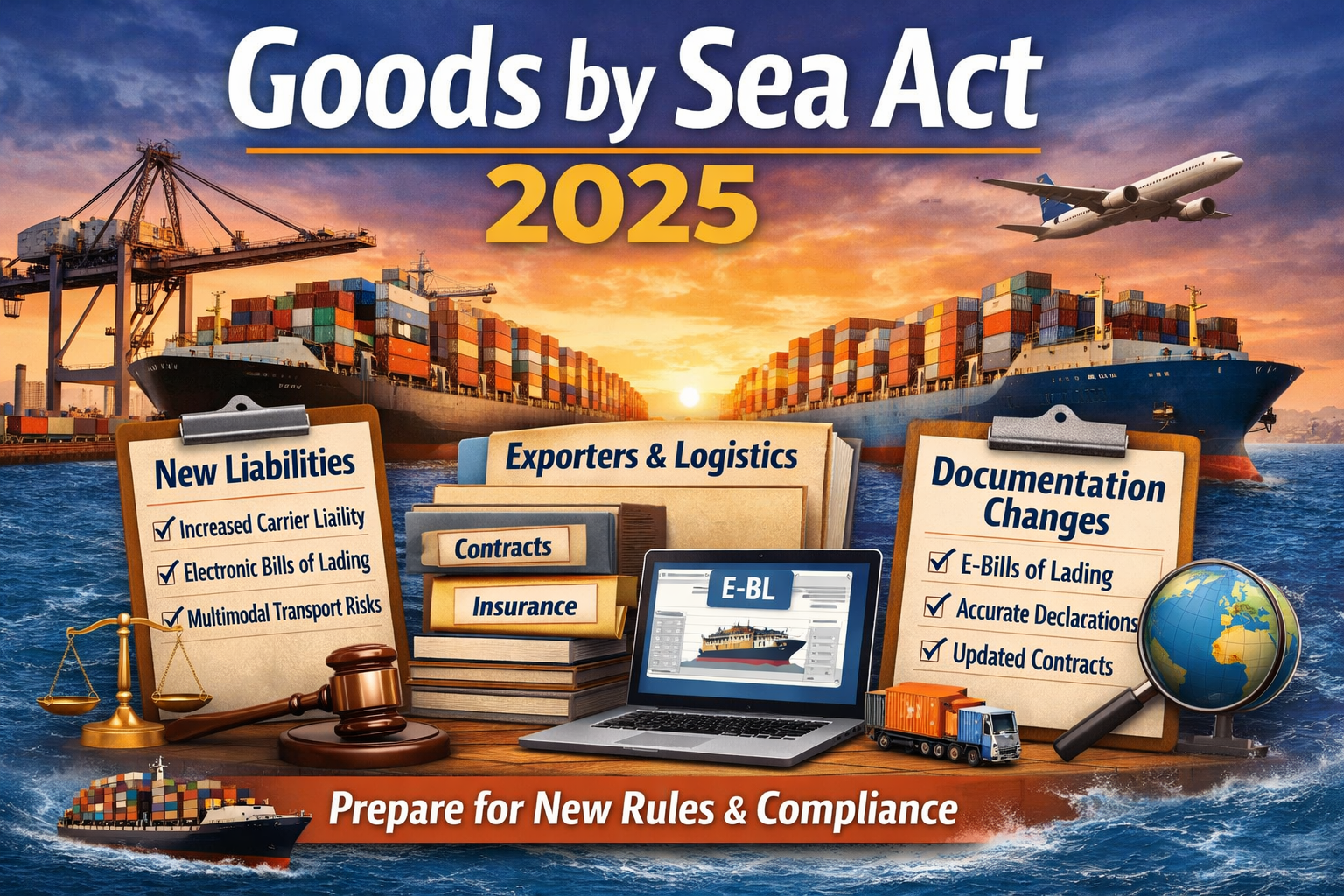
The Goods by Sea Act of 2025 marks one of the most significant reforms in international shipping regulation in decades. Designed to modernize maritime trade law and align domestic legal frameworks with evolving global shipping practices, this Act reshapes responsibilities for exporters, freight forwarders, carriers, and logistics companies. As global demand for seamless supply chains grows, understanding these changes isn’t optional—it’s essential.
In this blog, we’ll explore the key updates under the Goods by Sea Act, who is affected, and how exporters and logistics companies can prepare for the new liabilities, rights, and documentation requirements.
Why the Goods by Sea Act Matters in 2025
The shipping industry has long operated under legacy legislation that struggled to keep pace with digitalization, complex multimodal transport, and increased liability exposure. The Goods by Sea Act 2025 updates critical legal standards around contract formation, cargo handling obligations, and dispute resolution. These changes carry financial and operational implications that exporters and logistics companies must understand before trading under the new regime.
New Liabilities under the Goods by Sea Act
Expanded Carrier Liability for Loss & Damage
One of the most impactful sections of the Goods by Sea Act is the extension of liability for cargo loss, damage, and delay. Carriers previously able to limit liability under old statutes may now face broader accountability, especially when:
-
Cargo is misdeclared.
-
Containers are improperly stowed.
-
Delays cause downstream losses.
Exporters must now reassess insurance coverage and contractual terms to address these expanded liabilities.
Digital Documentation & Electronic Bills of Lading
The Goods by Sea Act officially recognizes electronic bills of lading (e-BLs) as equivalent to paper versions. While this promises greater efficiency, it also introduces new risks:
-
Data integrity concerns
-
Cybersecurity vulnerabilities
-
Authentication disputes
Exporters need updated digital systems and training to avoid transactional errors that could trigger liability.
Chain of Responsibility in Multimodal Transport
Under the Goods by Sea Act, liability isn’t limited to sea carriers alone. Freight forwarders, NVOCCs, and logistics partners may share responsibilities when cargo transitions across modes (e.g., sea to rail). This collective accountability means:
-
More complex contracts
-
Potential claims against multiple parties
-
A need for clearer risk allocation
New Rights for Exporters & Logistics Operators
While the Goods by Sea Act increases certain liabilities, it also strengthens rights in key areas.
Right to Information & Transparency
Exporters now have statutory rights to:
-
Clear cargo tracking data
-
Contract terms disclosure
-
Timely notification of deviations or delays
This transparency enables better planning and risk mitigation across global supply chains.
Improved Dispute Resolution Frameworks
The Act encourages commercial dispute resolution mechanisms, including:
-
Arbitration options
-
Mediation pathways
-
Faster court proceedings
Exporters and logistics companies benefit from structured dispute timelines and enforceability clauses, reducing time and legal costs.
Extended Time Limits for Claims
Under previous law, deadlines to file shipping claims were short and rigid. The Goods by Sea Act extends these periods in many cases, allowing exporters more time to:
-
Inspect shipments
-
Assess damage
-
Prepare evidentiary documentation
Documentation Changes under the Goods by Sea Act
Documentation remains a cornerstone of international trade. The Goods by Sea Act modernizes several key documents.
Electronic Bills of Lading (e-BLs)
The Act elevates e-BLs to legal parity with paper bills of lading. Exporters and logistics companies should ensure:
-
Their IT systems support compliant e-BL issuance
-
Staff are trained in digital authentication
-
Backup procedures exist for system failures
Cargo Declaration Accuracy
Misdeclared weight, value, or nature of goods can trigger heavier penalties due to updated enforcement provisions in the Act. Exporters must:
-
Validate declarations
-
Reconcile data between parties
-
Use consistent unit standards
Contract of Carriage Updates
Contracts must now include specific clauses mandated by the Goods by Sea Act, such as:
-
Limitation of liability terms
-
Applicable dispute resolution processes
-
Insurance coverage statements
Legal teams should revise templates promptly to reflect these standards.
Practical Steps to Prepare for the Goods by Sea Act
To navigate these changes effectively, exporters and logistics companies should take concrete preparatory actions:
Conduct a Legal & Contract Audit
Review all existing contracts related to sea freight and multimodal transport. Focus on:
-
Liability clauses
-
Jurisdiction terms
-
Documentation language
Identify clauses that conflict with the Goods by Sea Act and update them before they are triggered in real transactions.
Upgrade Digital Systems
Since the Goods by Sea Act embraces digital documentation, ensure your technology stack supports:
-
Secure e-BL issuance
-
Version tracking
-
Integration with partners’ platforms
Consider adopting blockchain-enabled solutions to strengthen data integrity and audit trails.
Train Internal Teams
Operational staff should receive training on:
-
New documentation standards
-
Risk identification under updated liabilities
-
Procedures for timely claims and dispute filings
Investing in staff proficiency minimizes errors and costly contractual disputes.
Reevaluate Insurance Coverage
Engage your brokers to examine whether current marine cargo insurance aligns with the revised liability landscape under the Goods by Sea Act. Consider:
-
Increased coverage limits
-
Expanded protection for delay and consequential losses
-
Cyber risk policies for digital document handling
The Goods by Sea Act of 2025 ushers in a new era for maritime trade law. Its expanded liabilities, enhanced exporter rights, and modern documentation requirements reflect the evolving realities of global logistics. Exporters and logistics companies that proactively adapt their contracts, digital systems, training, and risk strategies will be well positioned to thrive in this updated legal environment.
Implementing these changes isn’t just good practice—it’s a competitive advantage in a world where legal compliance and supply chain efficiency go hand in hand.
