
Published on October 17, 2025
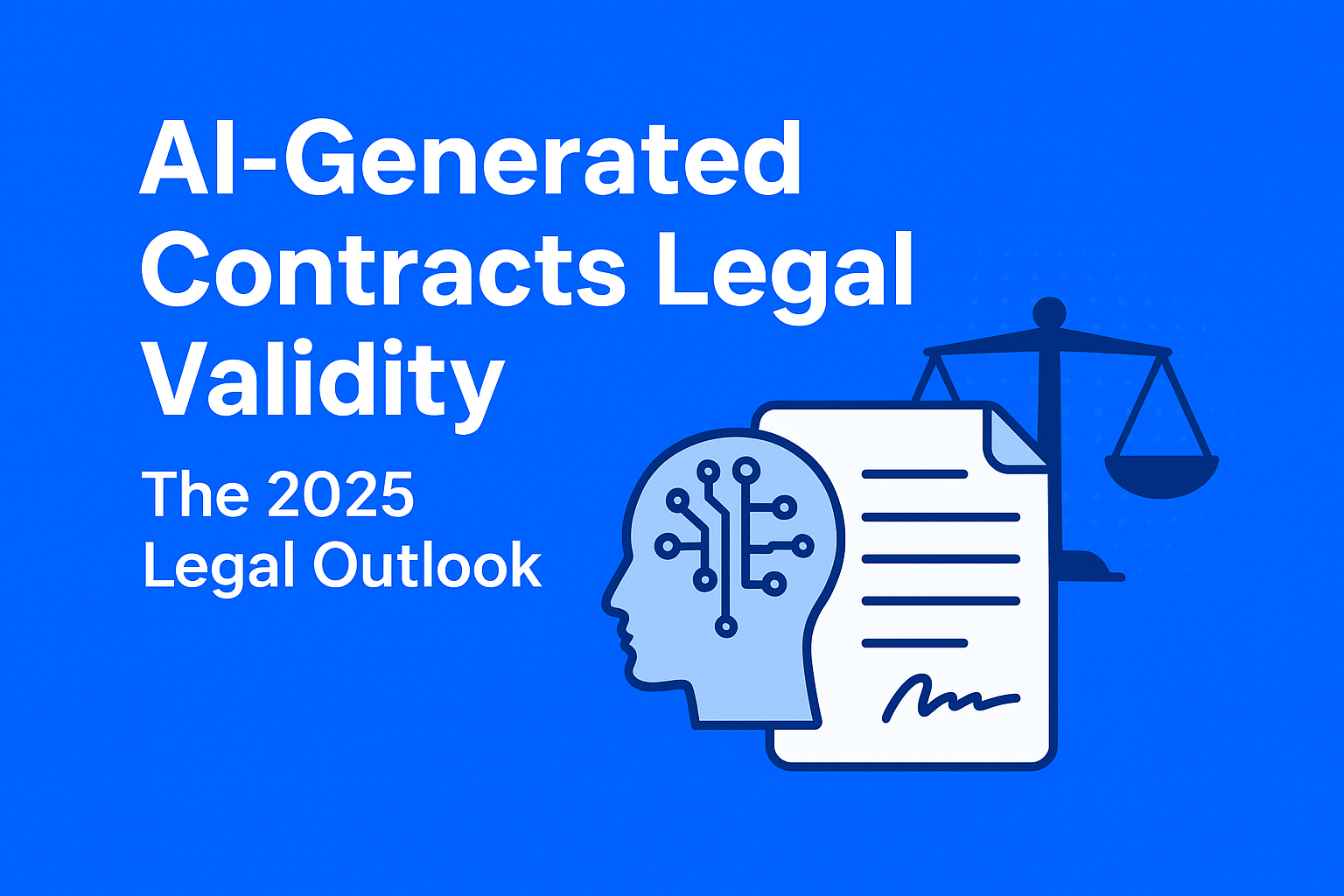
With artificial intelligence becoming a mainstream tool in the legal and business world, AI-generated contracts legal validity has become a key topic of discussion among businesses, lawyers, and regulators. As we enter 2025, countries across the globe are actively updating their legal frameworks to determine how contracts drafted by AI systems will be treated in courts.
Rising Use of AI in Contract Drafting
Businesses are increasingly relying on AI-powered platforms to create agreements—ranging from employment contracts to complex commercial deals. These tools promise speed, cost-effectiveness, and accuracy, reducing the need for extensive human drafting. However, their growing use raises important legal questions related to AI-generated contracts legal validity: Who is responsible for errors? Can AI truly reflect the parties’ intent? And will such contracts stand up in court?
Evolving Legal Frameworks
Several jurisdictions have started recognizing AI’s role in contract formation. The European Union has begun outlining AI governance standards under the EU AI Act , which indirectly affects how AI-generated contracts legal validity is assessed.
Meanwhile, in India, discussions are underway to determine whether AI can be considered a “tool” or a “party” in contract law, influencing the enforceability of AI-drafted agreements. In the United States, courts have not yet ruled directly on the legal validity of AI-generated contracts, but legal experts expect precedents to form in 2025 as more disputes involving AI-drafted agreements reach litigation.
For additional context, Harvard Law Review has published thought leadership on AI and legal accountability, which is expected to influence upcoming regulatory guidelines.
Key Legal Considerations
-
Intention & Consent: For a contract to be valid, both parties must have the intention to create legal relations. When an AI tool drafts a contract, courts will examine whether the human parties clearly agreed to the terms. This is central to AI-generated contracts legal validity.
-
Liability: If the AI introduces errors, responsibility may lie with the human user, the AI service provider, or both—depending on contractual disclaimers.
-
Regulatory Compliance: AI-generated contracts must still comply with data protection, digital signature, and e-commerce regulations to be legally binding. You can refer to the UNCITRAL Model Law on Electronic Commerce for international legal standards.
Expert Opinions
Legal experts suggest that while AI can automate drafting, human oversight remains essential. “Courts will look at the substance of the agreement, not the tool that created it,” says legal analyst Meera Nair. “If parties knowingly enter into an AI-drafted contract, the AI-generated contracts legal validity largely depends on compliance with existing contract law principles.”
Looking Ahead
The legal landscape is rapidly evolving. By the end of 2025, clearer judicial and regulatory positions are expected, offering greater certainty to businesses using AI tools for contract drafting. Until then, organizations are advised to review AI-generated contracts carefully and ensure human legal review before execution. Understanding AI-generated contracts legal validity will be essential for businesses navigating this new era of digital legal agreements.
For more legal updates, compliance news, and expert guidance, visit our In House Legal Solutions Section.

Rinu Ann George is an SEO Analyst at Upgraderz,Specializing in Search Engine Optimization,Content Strategy and Digital Visibility.